Water in the House, Step by Step: Power, Photos, Air and the Phone
A wet floor, a drip overhead or a drain that backs up. This walk-through puts the first stretch in order: danger, the source, power, photos, moving air and sorting what is wet, with the offices that answer in Cobb County.
Checked 1 Nov 2026
The six steps at a glance
- Look for dangerElectricity, gas, ceilings and sewage send people to 911 or the utility first.
- Find the sourceClose the supply at the meter, or phone the water utility.
- Check power and enginesAn electrician checks the wiring, and fuel-burning engines stay outdoors.
- Photograph and writePhotos, receipts and notes come before temporary repairs.
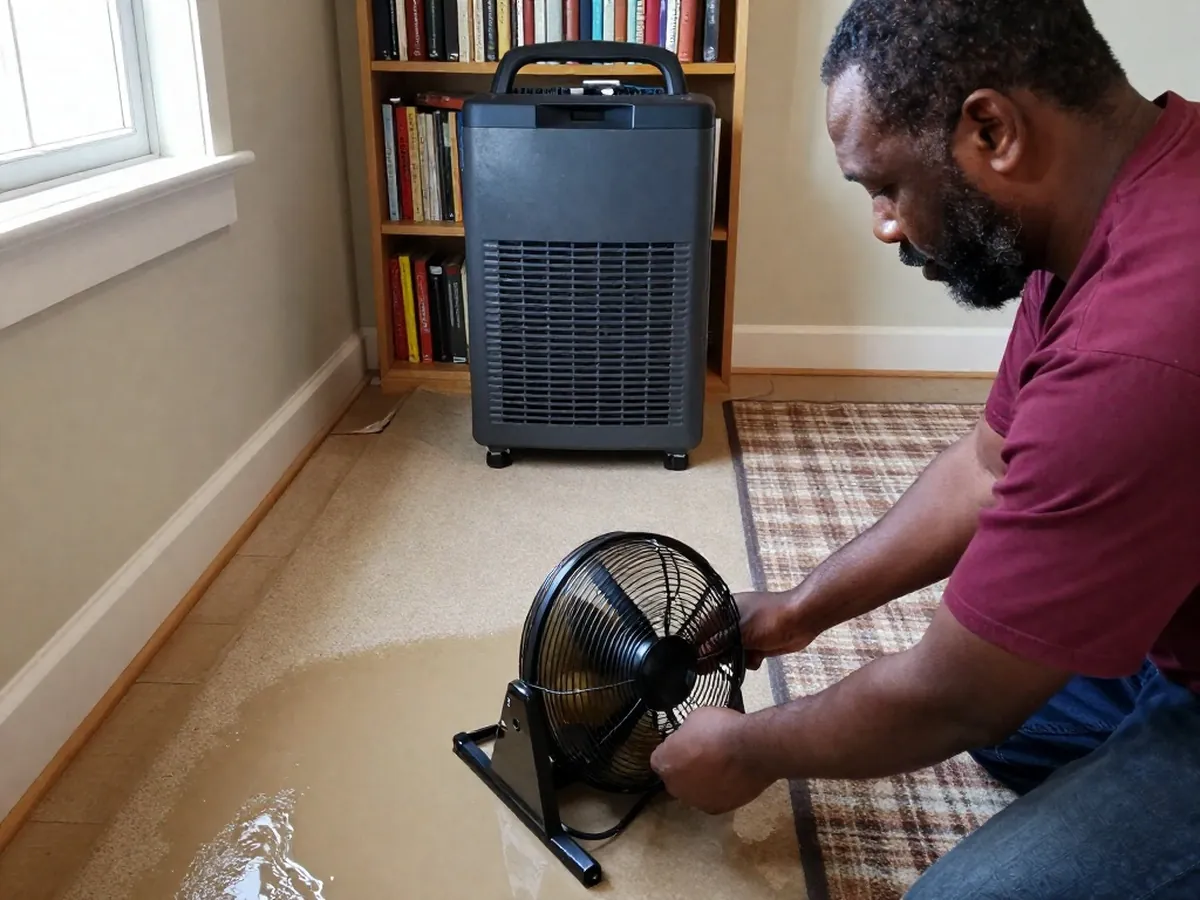
- Move the airFans blow outward with a dehumidifier running, and a flooded HVAC stays off.
- Sort what is wetItems that cannot be disinfected or dried go, and hard surfaces get soap and water.
Look for danger before anything else
Walk to the doorway, not into the room. Water around outlets, cords or the electrical panel keeps everyone out. CDC's advice for a main switch that sits behind standing water is to call an electrician instead of wading in. If anything sparks, buzzes or smells burnt, leave and phone 911 or Georgia Power.
A gas smell sends everyone outside first. From the yard, phone 911 or reach the Atlanta Gas Light emergency number, 877.427.4321. The American Red Cross describes a sagging ceiling as wet, heavy and dangerous, so keep clear of the floor under one and leave the middle of it alone.
Dark or foul water may be sewage. CDC says children stay out of floodwater areas, and hands get washed with soap and water after any contact.
Find the source and close it
In Smyrna, the utility FAQ points residents to the meter and a pair of pliers for closing the water. When that fails, the page lists (678) 631-5338 and (770) 431-2850, plus (770) 434-6666 for nights, weekends and holidays.
Marietta has Marietta Power & Water, whose water emergency line is 770-794-5230. In Mableton, Cobb County Water System covers the service area and keeps 770-419-6201 for gushing lines and sewer backups. A University of Georgia writer advises locating the main cutoff before a pipe lets go, so the meter box is worth finding on a dry day.
Check the power and keep engines outside
CDC says an electrician checks the house's electrical system before the power goes back on. Georgia Power adds that a damaged meter or service entrance has to be repaired by an electrician first, and that 1-877-749-3931 schedules the reconnection afterward.
CDC also says generators, pressure washers and any other gasoline engine stay out of a home, basement or garage, and keep a 20-foot gap from doors, windows and vents, even with the openings left open. The fumes carry carbon monoxide.
Photograph, write and keep receipts
Georgia's insurance commissioner suggests photographing or filming the damage before temporary repairs, then keeping the receipts for those repairs. The same tips advise holding permanent repairs back until someone has inspected the damage; a claim may be denied otherwise.
Policyholders are also asked to keep copies of all correspondence and to log every phone contact with the date, the name and what was said. Some policies require notice within a set time, so reading yours early helps. Nothing here promises that any policy covers a loss.
Get the air moving and leave a wet HVAC alone
CDC suggests running fans and a dehumidifier to draw out extra moisture, with the fans placed in a window or doorway and pointed outward so damp air leaves the house.
On drying the house, EPA's flood guidance rules out using any part of an HVAC system that flood water touched. Mold sets a second clock: EPA's guidance gives one to two days as the target for getting wet areas and belongings dry, and its flood page cautions that wood, drywall, carpet and furniture left sitting wet beyond a day can grow mold. A moisture meter reading at or under 15 percent marks a material as ready to refinish, and drying usually runs several days to weeks.
Sort what is wet
Under CDC's advice, whatever cannot be disinfected is thrown away: wall coverings, cloth, rugs and drywall are the examples given. Walls, hard floors and other hard surfaces are cleaned with soap and water.
EPA adds that absorbent materials which cannot be cleaned and dried belong in the trash. It also says flooded wall cavities are not to be sealed and surfaces that were wet get no paint or sealant.
When do these steps stop being enough?
A floor that stays damp once the standing water is gone, a wall that feels cool and wet, a smell that will not leave: those call for moisture readings and drying equipment. Read about water extraction and drying, or burst pipe water damage if the water came from a line.
Stuck on a step, or not sure which one you are on? Call (678) 679-5538 and say where you are in the list.
Pages behind these facts
- Centers for Disease Control and Prevention, Safety Guidelines: Reentering Your Flooded Home (updated 24 Aug 2026)
- Centers for Disease Control and Prevention, Safety Guidelines: Floodwater (updated 24 Aug 2026)
- U.S. Environmental Protection Agency, Flood Cleanup to Protect Indoor Air and Your Health (updated 18 Mar 2026)
- U.S. Environmental Protection Agency, A Brief Guide to Mold, Moisture and Your Home (updated 18 Feb 2026)
- American Red Cross, Checking Your Home's Structure
- Atlanta Gas Light, Emergency Information
- Georgia Power, Power Restoration Process
- Georgia Office of Commissioner of Insurance and Safety Fire, Insurance Claim Tips
- City of Smyrna, Utility Services Frequently Asked Questions
- City of Marietta, Contact Information
- Cobb County Government, Water System | Cobb County Georgia
- University of Georgia College of Agricultural and Environmental Sciences, Winterize pipes soon, avoid springtime troubles (2004 article; page modified 13 Aug 2025)